
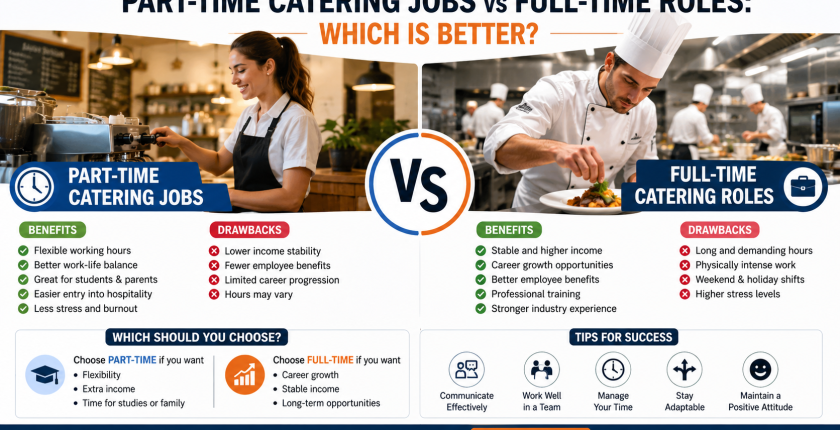
Part-Time Catering Jobs vs Full-Time Roles: Which Is Better?
The UK hospitality industry continues to grow rapidly in 2026, creating thousands of opportunities for people looking to build careers in restaurants, hotels, cafés, event management, and food service businesses. One of the biggest questions job seekers face is whether to choose part-time or full-time work.
Both options offer unique advantages depending on your lifestyle, financial goals, and career ambitions. Some people prefer flexibility and freedom, while others value long-term stability and professional growth.
If you are currently exploring new opportunities in hospitality, platforms like Caterer Jobs can help you discover a wide range of vacancies across the UK, from entry-level catering roles to senior hospitality management positions.
This detailed guide compares part-time and full-time catering jobs to help you decide which option may suit you best.
Understanding Catering Jobs in the UK
The hospitality and catering sector covers a huge range of professions, including:
- Chefs
- Kitchen assistants
- Restaurant managers
- Event catering staff
- Hotel workers
- Baristas
- Bartenders
- Front-of-house teams
- Food delivery coordinators
Today, Caterer Jobs are available in almost every UK city, with demand remaining especially strong in London, Manchester, Birmingham, Edinburgh, and tourist destinations.
What Are Part-Time Catering Jobs?
Part-time catering roles usually involve fewer weekly working hours compared to full-time contracts. Employees often work flexible shifts, including evenings, weekends, or seasonal schedules.
These jobs are popular among:
- Students
- Parents
- Freelancers
- Career changers
- Semi-retired professionals
Common Part-Time Catering Roles
Restaurant Server
Flexible restaurant shifts in cafés, pubs, and fine dining venues.
Event Catering Assistant
Temporary jobs for weddings, conferences, festivals, and corporate events.
Barista
Coffee shop roles with morning or weekend schedules.
Kitchen Porter
Support work within busy commercial kitchens.
Benefits of Part-Time Catering Jobs
Better Work-Life Balance
One of the biggest reasons people choose part-time work is flexibility. Employees often have more time for studies, family responsibilities, or side projects.
Easier Entry into Hospitality
Many hospitality employers use part-time roles as entry-level opportunities for people with limited experience.
Flexible Scheduling
Part-time shifts can often fit around university schedules or other commitments.
Less Physical Burnout
Hospitality work can be demanding, so working fewer hours may reduce stress and fatigue.
Drawbacks of Part-Time Catering Jobs
Less Stable Income
Hours may fluctuate depending on business demand, seasonal traffic, or event schedules.
Fewer Employee Benefits
Some part-time staff may not receive:
- Paid holidays
- Pension contributions
- Career training
- Healthcare perks
Slower Career Progression
Moving into leadership or management roles can sometimes take longer.
What Are Full-Time Catering Roles?
Full-time catering jobs generally involve structured schedules and longer weekly hours. Employees usually work between 35–45 hours each week and often receive permanent contracts.
These roles are ideal for professionals seeking:
- Career growth
- Stable earnings
- Long-term hospitality careers
- Leadership opportunities
Benefits of Full-Time Catering Jobs
Consistent Monthly Income
Full-time employees receive predictable wages, making budgeting and financial planning easier.
Better Career Development
Employers are more likely to invest in training and promotions for permanent staff members.
Additional Employee Benefits
Many full-time hospitality positions include:
- Paid annual leave
- Sick pay
- Pension contributions
- Staff meals
- Career progression programs
Faster Skill Development
Daily exposure to busy hospitality environments helps workers improve communication, teamwork, and operational skills quickly.
Many professionals searching for long-term hospitality careers regularly browse Caterer Jobs to find chef roles, hotel management opportunities, and premium catering positions across the UK.
Downsides of Full-Time Catering Roles
Long and Demanding Hours
Hospitality schedules often include:
- Late nights
- Weekends
- Public holidays
- Double shifts
Physically Intensive Work
Standing for extended periods and working in fast-paced kitchens can become exhausting.
Higher Stress Levels
Full-time catering professionals usually handle more responsibility and pressure.
Part-Time vs Full-Time Catering Jobs: Quick Comparison
| Feature | Part-Time Roles | Full-Time Roles |
|---|---|---|
| Flexibility | High | Moderate |
| Income Stability | Lower | Higher |
| Career Growth | Slower | Faster |
| Employee Benefits | Limited | Better |
| Work-Life Balance | Better | More demanding |
| Ideal For | Students & flexible workers | Career-focused professionals |
| Training Opportunities | Basic | Advanced |
Which Option Is Better for Students?
For students, part-time hospitality work is often the smarter option.
Benefits include:
- Flexible hours
- Extra income
- Customer service experience
- Skill development
- Easier work-study balance
Restaurants, coffee shops, and event venues frequently hire students for weekend and evening shifts.
Which Option Is Better for Career Growth?
If your long-term goal is to become:
- Head chef
- Restaurant manager
- Hotel operations manager
- Catering director
Then full-time work is usually the better route.
Permanent employees often receive:
- Leadership opportunities
- Professional certifications
- Internal promotions
- Advanced hospitality training
Which Type of Catering Job Pays More?
In general, full-time roles provide higher annual earnings due to longer hours and employee benefits.
However, experienced part-time workers in busy locations can still earn excellent money, especially when tips are included.
Example:
- Event catering staff in London can earn strong hourly rates during wedding seasons.
- Skilled bartenders in premium venues may earn significant tips during weekends.
Actionable Tips for Choosing the Right Catering Job
1. Consider Your Lifestyle
Think carefully about:
- Your financial needs
- Family commitments
- Education
- Health and energy levels
2. Define Your Career Goals
If hospitality is your long-term career path, full-time experience can accelerate growth.
3. Start Small if Unsure
Many successful hospitality professionals begin with part-time jobs before transitioning into permanent roles.
4. Research Employers Carefully
Not all hospitality businesses offer the same working conditions or progression opportunities.
Checking reviews and current listings on Caterer Jobs can help you compare salaries, locations, benefits, and company reputations before applying.
Hospitality Industry Trends in 2026
Several major trends are shaping the UK catering industry this year.
Flexible Working Is Increasing
Many employers now offer more adaptable scheduling options.
Demand for Skilled Chefs Remains High
Experienced chefs continue to be among the most sought-after professionals in hospitality.
Event Catering Is Growing Rapidly
Weddings, festivals, and corporate events continue driving recruitment demand across the UK.
Sustainability Is Becoming Important
Hospitality employers increasingly value staff familiar with:
- Sustainable food sourcing
- Waste reduction
- Eco-friendly kitchen practices
Essential Skills for Success in Catering Jobs
Whether you choose part-time or full-time work, these skills can help you stand out.
Communication Skills
Customer interaction is a major part of hospitality work.
Teamwork
Successful kitchens and restaurants rely on strong teamwork.
Time Management
Busy service periods require speed and organisation.
Adaptability
Hospitality environments can change quickly.
Positive Attitude
Professionalism and reliability are highly valued by employers.
Final Verdict: Which Is Better?
There is no universal answer because the best option depends entirely on your goals, lifestyle, and priorities.
Choose part-time catering jobs if you value:
- Flexibility
- Extra free time
- Side income
- Work-life balance
Choose full-time catering roles if you want:
- Stable earnings
- Career progression
- Long-term growth
- Professional development
The good news is that the UK hospitality industry offers excellent opportunities for both paths. Many professionals move between part-time and full-time roles throughout different stages of their careers.
If you are ready to explore new hospitality opportunities, browsing the latest vacancies on Caterer Jobs can help you find positions that match your experience, schedule, and career ambitions.